
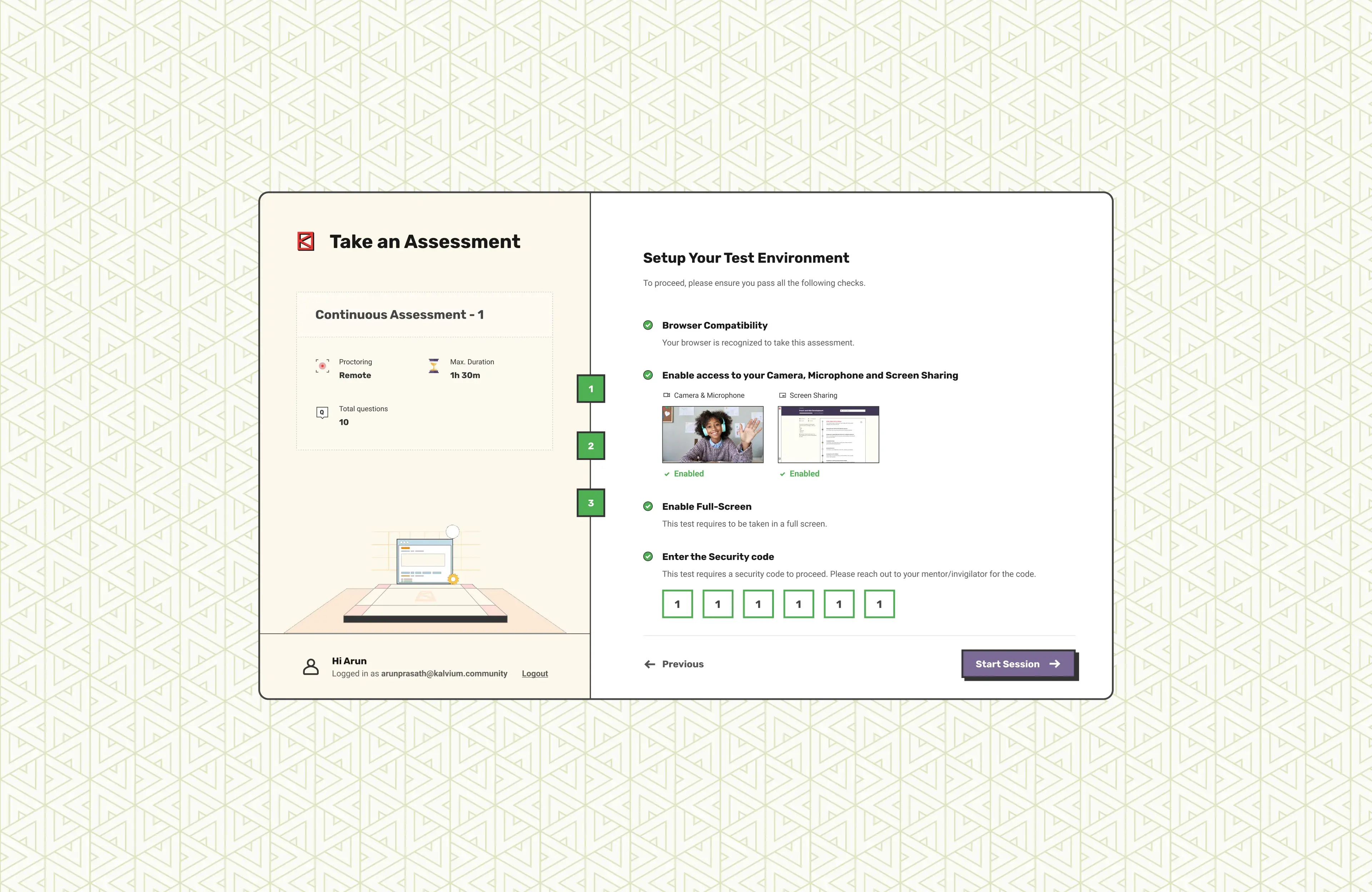
Kalvium needed a dedicated tool for conducting assessments. The reliance on manual processes and a patchwork of non-specialized platforms created significant friction for both students and the internal teams (authors) who created the tests.
Key pain points included:
- Confusing Interfaces: Inconsistent flows and layouts caused student confusion and anxiety.
- Technical Disruptions: The systems couldn't handle real-world issues like intermittent internet, leading to lost work and unfair outcomes.
- Lack of Control: Educators had limited ability to customize tests or enforce academic integrity.
The opportunity was clear: we needed to build a user-centric platform that could bring clarity and security to the assessment process for everyone involved.
My Role 👤
As the sole product designer for Assessment, I was responsible for the complete design process, including:
- Conducted researches and identified insights
- Braistormed with stakeholders and ideated potential solutions
- Visualised the solutions from wireframes to high-fidelity mockups.
- Prototyped, tested, and iterated based on real student usage.
- Collaborated directly with developers for implementation and QA.
My Approach: From Insight to Implementation
- Research & Uncovering Key Insights
I began by interviewing both students and authors/internal users to identify pain points in previous testing workflows.
This process uncovered two foundational insights:
- For students, clarity is confidence. The biggest source of stress wasn't the test content itself, but the fear that the system would fail them. They needed to trust the platform.
- For authors, control is key. They needed the flexibility to create different types of assessments and the tools to ensure academic honesty.

- Ideation & Defining the Core Experience
With these insights, I collaborated with stakeholders to define our core features. We had to balance competing needs: How could we make the platform flexible for authors yet simple for students? How could we enforce security without creating a stressful, prison-like environment?
This led us to prioritize a modular design. Key components like proctoring, browser checks, and passcodes would be optional "blocks" that authors could enable as needed. This gave authors control while ensuring the student experience was never more complex than necessary.
- Design & Prototyping: Building a Reliable Journey
I translated these concepts into wireframes and interactive prototypes, focusing on creating a seamless and logical user flow.
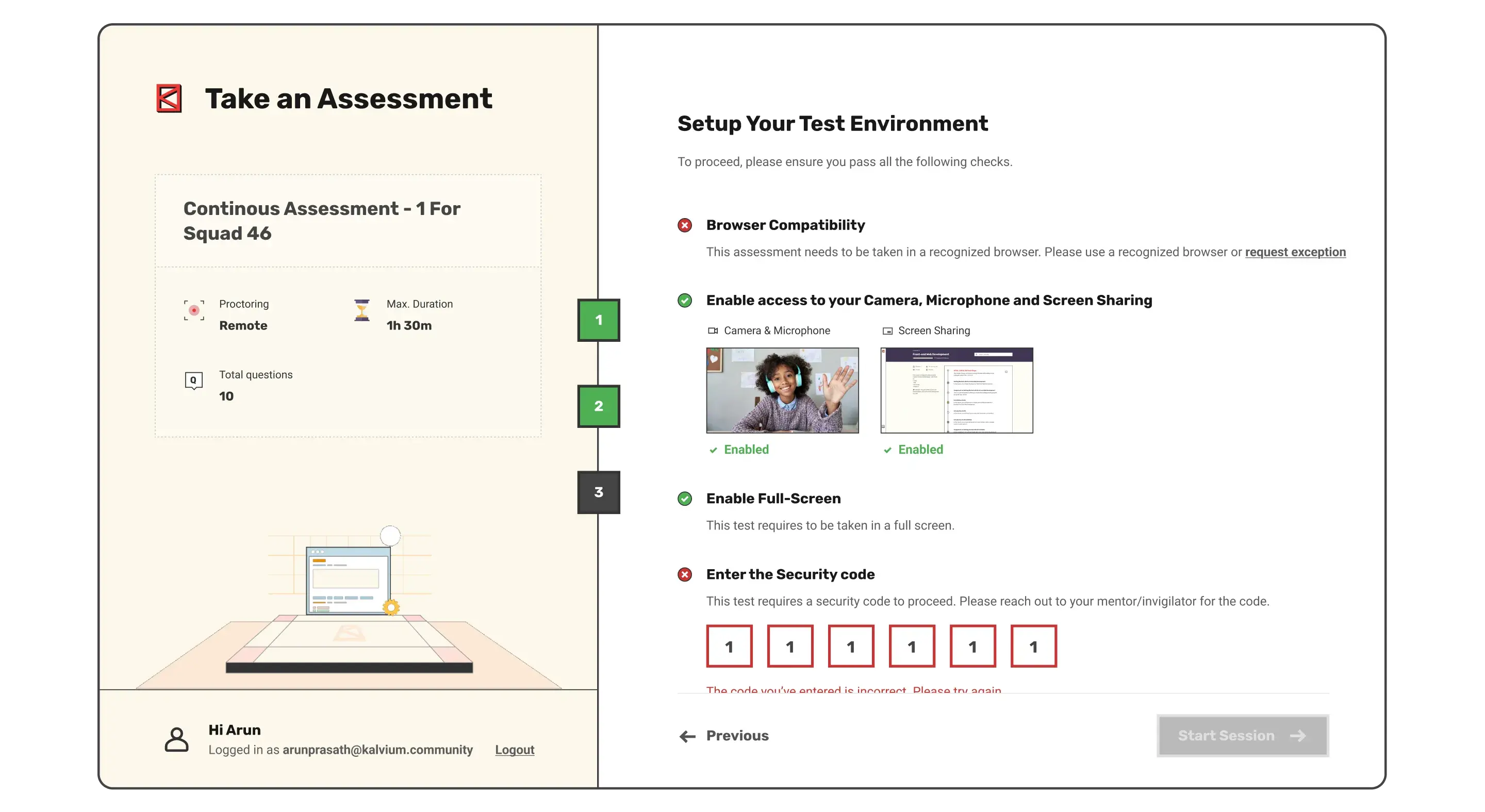
A Welcoming and Clear Onboarding The journey starts not with a test, but with reassurance. The onboarding flow guides students through a series of checks, confirming their setup is correct. This proactive approach prevents technical issues and builds confidence before the timer even starts.
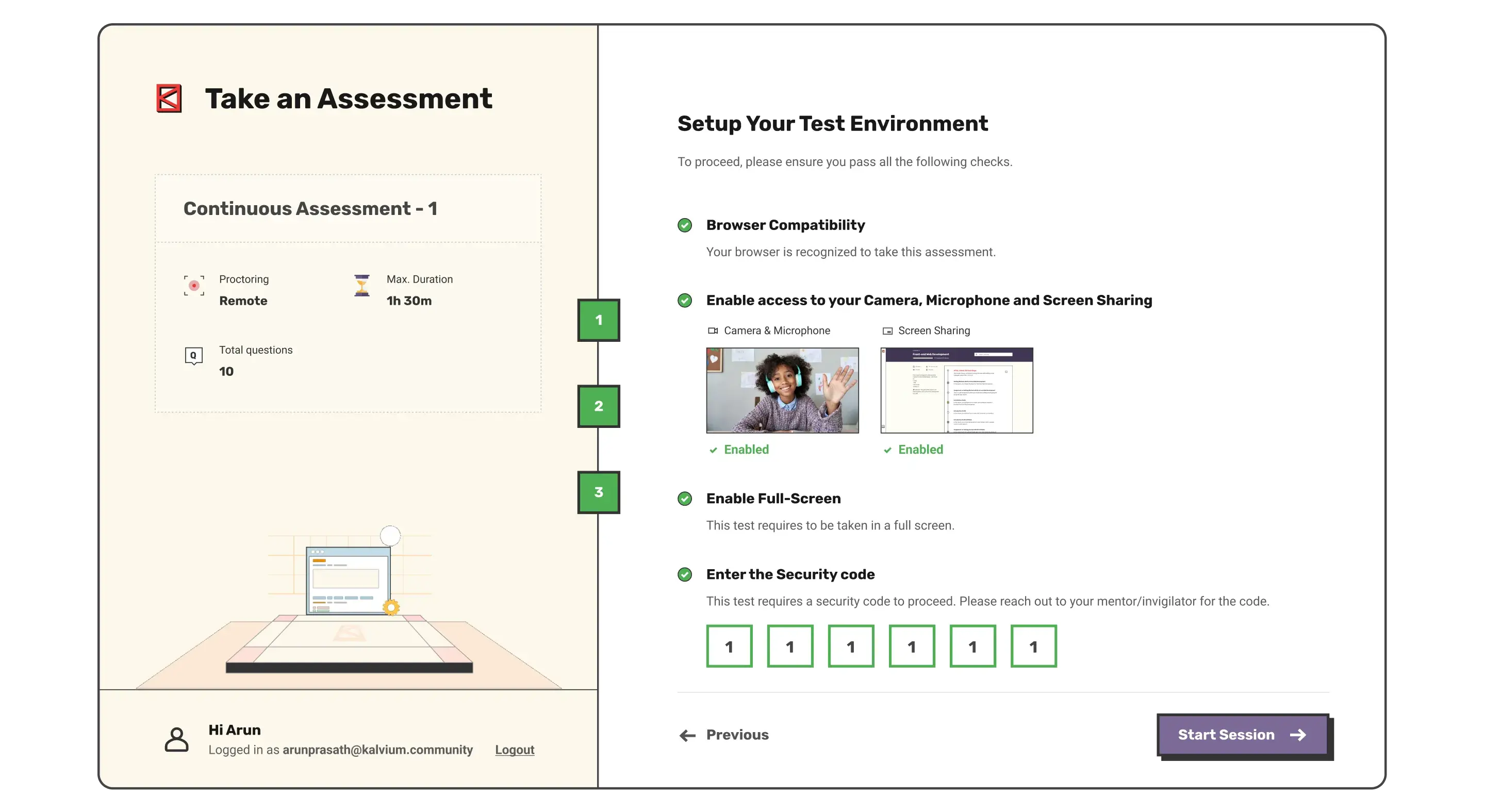
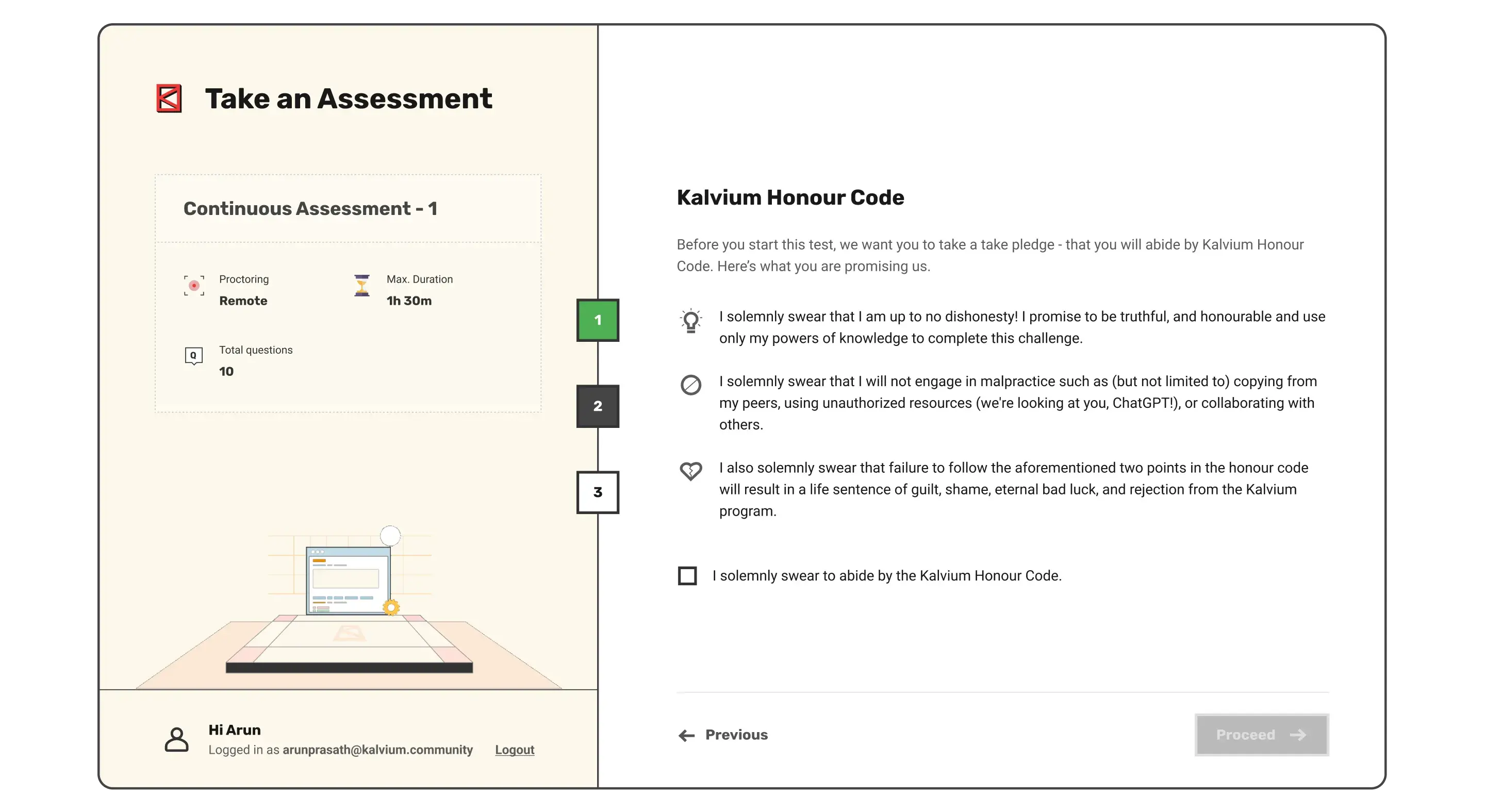
Upholding Academic Integrity with Respect To maintain integrity, we needed to align students with the honor code and secure the test environment. I designed these steps to be clear and straightforward, making them part of the setup routine rather than an intimidating warning. Features like camera proctoring and passcode locks were designed to be enabled only when necessary, respecting the context of the assessment.
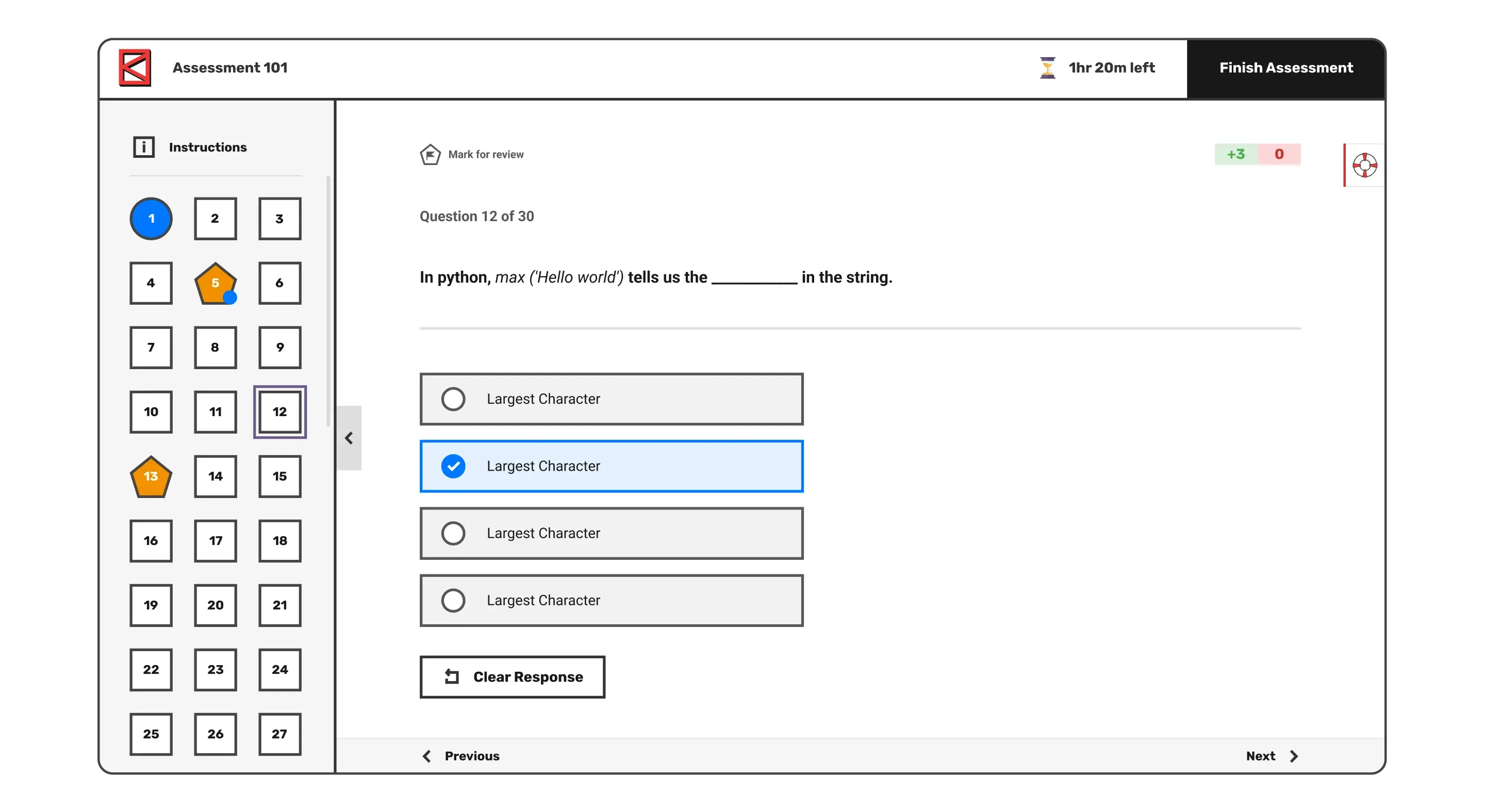
A Calm and Focused Testing Environment During the test, the interface is deliberately minimal to reduce cognitive load. I designed multiple navigation options—like a question palette and next/previous buttons—to give students the flexibility to move through the test in a way that feels natural to them. The persistent timer is clearly visible but not distracting.
- Iteration & Designing for Failure
Assessments are high-stakes. My most critical design challenge was answering: "What happens when things go wrong?"
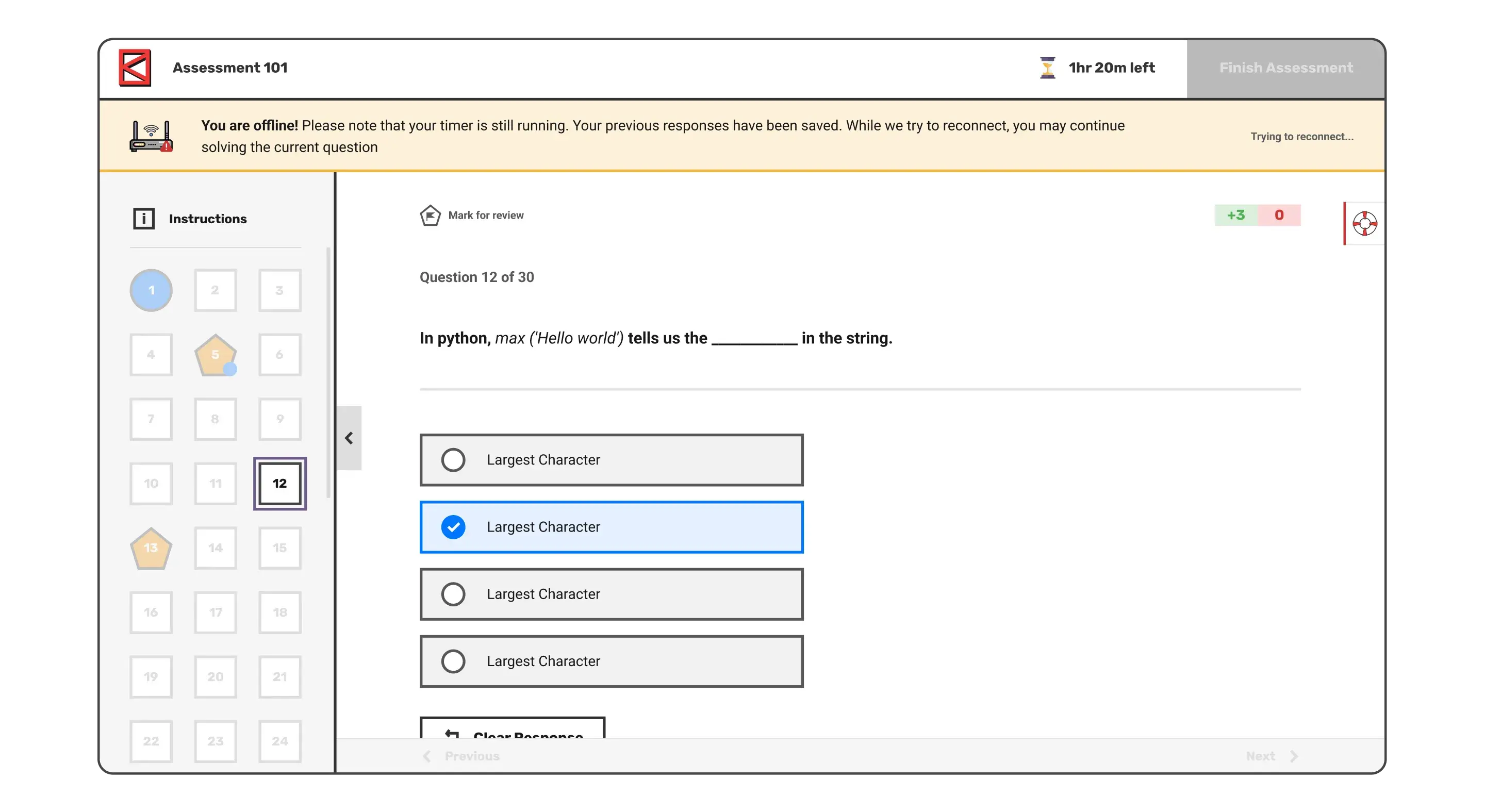
I designed a robust "fail-safe" system. If a student's internet connection drops, a clear, non-alarming banner appears, and the system automatically tries to reconnect. This transforms a moment of panic into a manageable inconvenience, assuring the student that their progress is safe.
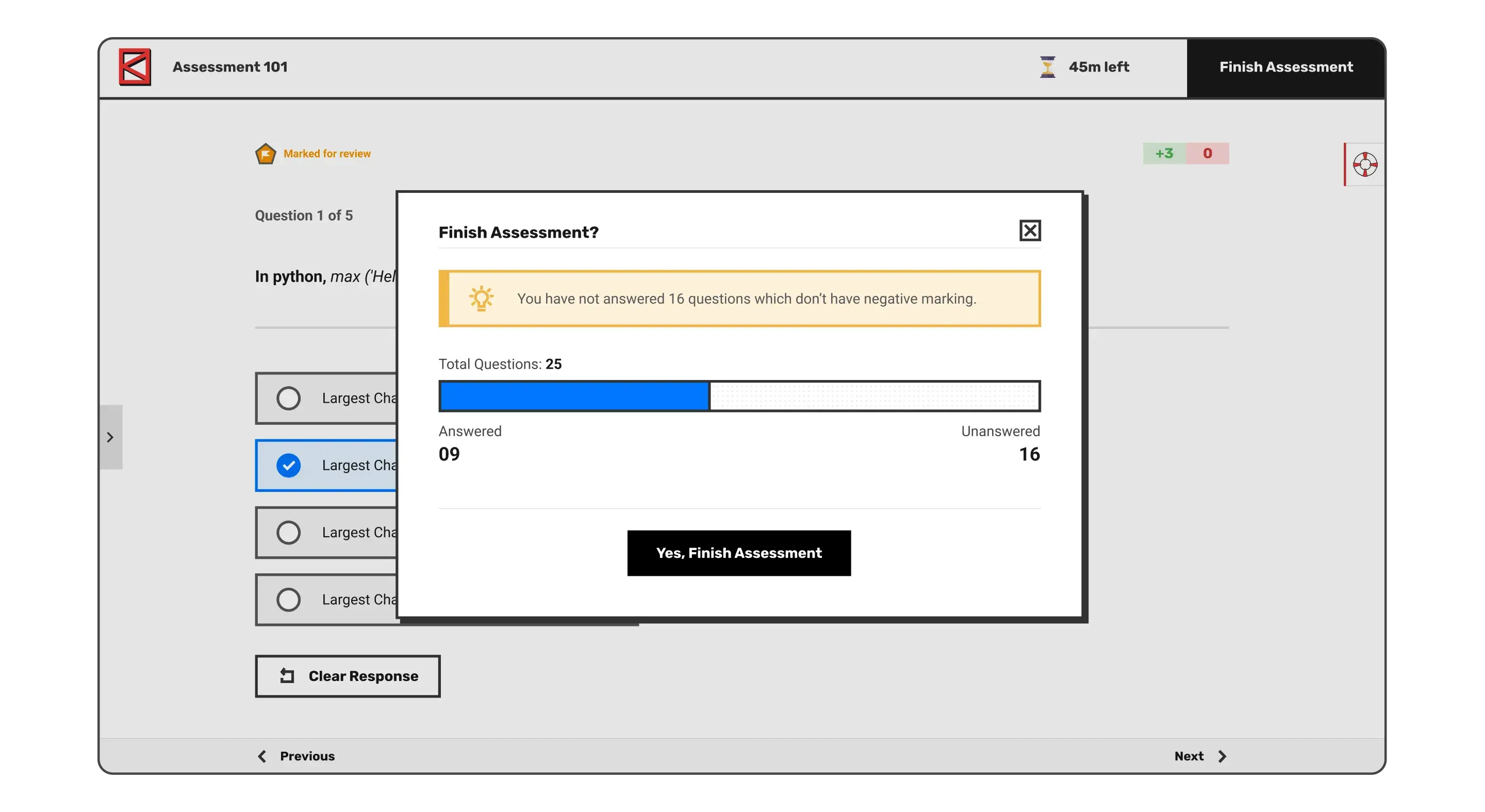
Further usability testing revealed another point of anxiety: the final submission. Students were afraid to click "End Assessment," fearing they might have missed a question. To solve this, I designed a confirmation modal that features a consolidated summary of their progress. This simple "review step" provides a final moment of clarity and empowers students to submit with confidence.
- Collaboration & Developer Handoff
Worked closely with the development team to ensure that all design elements were accurately implemented. Provided comprehensive design assets and specifications to support a smooth handoff.
- Final Testing & Launch
Performed final usability evaluations to confirm that the platform delivered a seamless and secure testing experience. Ensured that every feature—from onboarding to automatic reconnection—functioned as intended before launch.
Outcomes & Impact: A New Standard for Assessments
- ✅ Established Trust and Reduced Anxiety: The platform's transparent onboarding and robust fail-safes successfully addressed the core student fear of technical disruption. This created a more equitable environment where students can focus on the material, not on the stability of the tool.
- ✅ Empowered Educators with Flexibility and Control: Authors now have a centralized, powerful tool to create, monitor, and customize assessments. The modular design allows them to tailor the level of security to the needs of each specific test.
- ✅ Became the Go-To Solution: The platform was adopted across all academic modules in Kalvium's curriculum, replacing the old, inconsistent methods. It has become the trusted standard for delivering a fair, secure, and frictionless testing experience.